UNIVERSALISM
Ensemble
Universalism
In philosophy, universality is the idea that universal facts exist and can be discovered, as opposed to relativism, which asserts that all facts are merely relative to one’s perspective. It posits that it is possible to apply generalised norms, values and ethics to all people and cultures, regardless of the contexts in which they are located. These norms may include a focus on human needs, rights, or biological and psychological processes, and are based on the perspective that all people are essentially equivalent. Universalism has been critiqued by post-modern and post-colonial thinkers, who find lack of evidence for any ideas or values that can be applied truly universally. In his book European Universalism: The Rhetoric of Power (2006), sociologist and economic historian Immanuel Wallerstein considers universalism as a successor to colonialism as a means of speaking on behalf of the developing world and interfering in the business of other countries. He charts how the Western world has attempted repeatedly to create universals since the Enlightenment, from such things as modernism as an attempted universal language or condition, though to such things as human rights. In his understanding, universalism can be seen as the shift from the Western stereotypical perspective of the East (historically described as ‘orientalism’ by Edward Said), to a Western sense of something shared, to which the Non-Western might not always conform. As universalism is ascribed the status of being natural law by the West, non-conformity permits the right to intervention, whether through aid, cultural intervention or even warfare.
The Universal Declaration of Human Rights (UDHR)
Universalist Exhibitions
Universal Languages
Modernism
Modernist architecture

Items
View all-
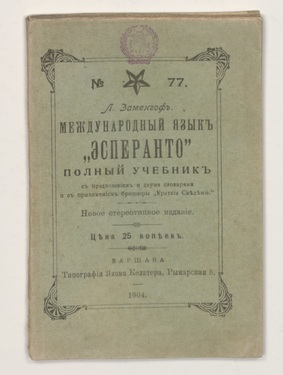
L. Zamenhof, "Unua Libro"
L. Zamenhof, "Unua Libro", 1904. Book.
-
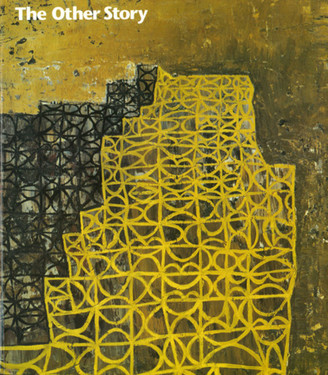
The Other Story: Afro-Asi...
Rasheed Araeen, The Other Story: Afro-Asian artists in Post-War Britain, 1989. Book.
-
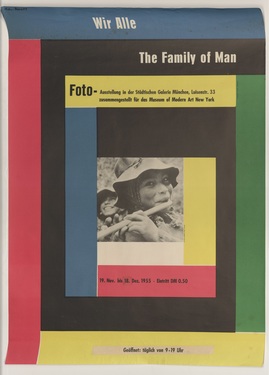
The Family of Man exhibit...
The Family of Man exhibition poster, 1955. Poster, the family of man exhibition poster, 1955. designed by müller-blase, 84 x 59,5 cm.
-

The Family of Man
The Family of Man, 1955. Book.
Actors
View all-
Luc Deleu
Luc Deleu (°1944) calls Antwerp his home. In 1970, just after having graduated from his architectural studies, he founds the T.O.P. office (T
-
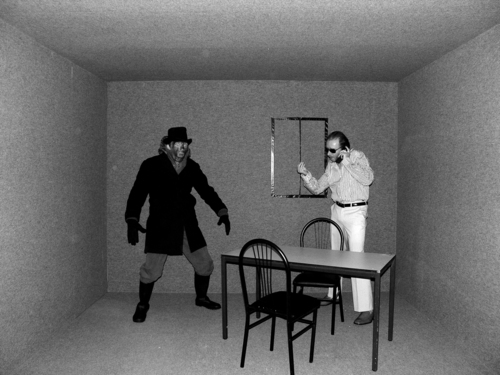
Jos De Gruyter & Harald T...
Jos de Gruyter and Harald Thys’s art casts a merciless perspective on reality. Through their numerous artistic approaches – including install
-

Matti Braun
Matti Braun is interested in the relationships between different cultures such as the connection between early 20th Century Indian art histor
Ensembles
View all-
MONOCULTURE – Universalis...
The Family of Man and Murmurs of Earth: The Voyager Interstellar Record The Family of Man was a photography exhibition curated by Edward
-
MONOCULTURE - The UHDR
The Universal Declaration of Human Rights (UDHR) was adopted by the United Nations General Assembly on December 10, 1948. The 30-article reso
-

MONOCULTURE – Modernist a...
Modernism in architecture became an international movement by 1928 with the establishment of the Congrès Internationaux d’Architecture Modern
-
MONOCULTURE - Modernism
Modernity Modernity, a topic in the humanities and social sciences, is both a historical period (the modern era) and the ensemble of part