Joseph Beuys' Eurasia
Ensemble
Du point de vue géographique, le terme d’Eurasie fait référence au continent qui comprend aussi bien l’Europe que l’Asie. Dans l’œuvre de Joseph Beuys, le terme d’Eurasie, sans aucun doute inspiré des ouvrages de Rudolf Steiner (1861-1925), acquiert une place centrale comme concept anthropologique et philosophique. Beuys problématise la séparation artificielle entre Orient et Occident. L’artiste souhaite réunifier l’Europe divisée et en même temps relier l’intuition et la spiritualité asiatique avec le réalisme et la rationalité européens. Pour Beuys, l’Eurasie est un espace ouvert, sans frontières physiques ou idéologiques. L’artiste eurasiatique n’est plus axé sur lui-même, mais sur l’humanité et la culture. L’Eurasie était aussi une manière de détourner le regard des États-Unis, la puissance dominante de la modernité. Beuys ne s’est rendu qu’une seule fois en Asie, lors d’un séjour au Japon en 1984.

Items
View all-
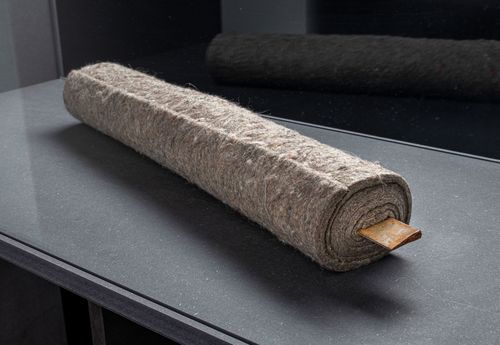
Samurai Schwert [Samurai ...
Joseph Beuys, Samurai Schwert [Samurai Sword], 1983. Multiple, multiple of felt and steel, 9 x 54 cm.
-
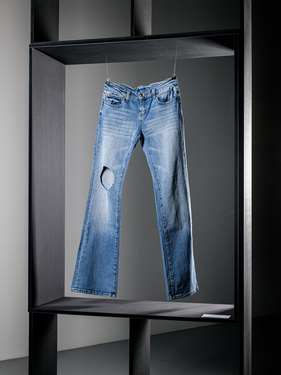
The Orwell Leg – Trousers...
Joseph Beuys, The Orwell Leg – Trousers for the 21st Century. Multiple, multiple of denim jeans with holes cut in the knees.
-
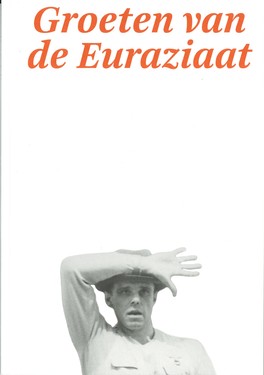
Joseph Beuys - Groeten va...
Joseph Beuys, Joseph Beuys - Groeten van de Euraziaat, 2017. Book, ink, paper, 28.6 x 20 cm, 47 p., language : Dutch, publisher : Museum van Hedendaagse Kunst Antwerpen/Koenig Books London, ISBN : 978-3-96098-265-4.
-
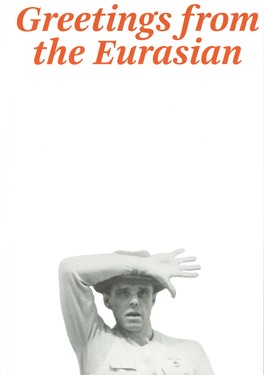
Joseph Beuys - Greetings ...
Joseph Beuys, Joseph Beuys - Greetings from the Eurasian, 2017. Book, ink, paper, 28.6 x 20 cm, 141 p., language : English, publisher : Museum van Hedendaagse Kunst Antwerpen/Koenig Books London, ISBN : 978-3-96098-264-7.
Actors
View all