Window on Infinity - Room 07
Ensemble
A canvas with stainless steel reflectors, by Hermann Goepfert. A composition with mirror surfaces, by Christian Megert. A sculpted torsion form, by Walter Leblanc. Unlike his colleagues, Verheyen does not experiment with mirror, glass or steel. He paints in oil on burlap and sticks to the two-dimensional canvas. All these works nevertheless have one thing in common: they are in constant dialogue with the light. Verheyen and the ZERO artists invite us not to stand still and stare, but rather to move past the works. In that way we activate light and space and become part of the work.

Items
View all-
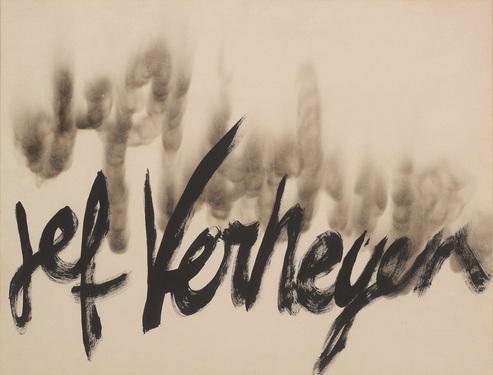
• 0826 • Untitled
Jef Verheyen, Galerie Bernard, • 0826 • Untitled, 1961. Drawing, smoke drawing on paper, 48 x 60 cm.
-
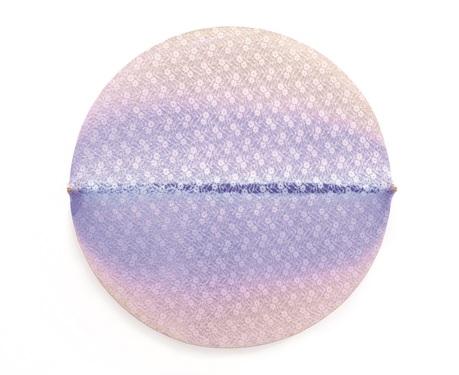
Verloren Ruimte (Lost Spa...
Guy Mees, Verloren Ruimte (Lost Space), 1965. Installation, lace, blue neon, wood, 120 cm ø.
-
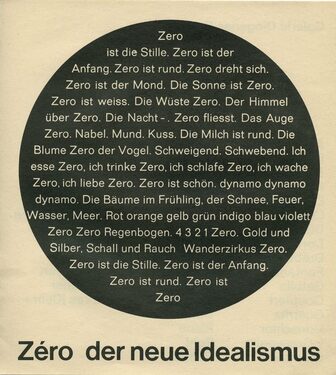
Manifesto 'ZERO der neue ...
Galerie Diogenes, Jef Verheyen, Manifesto 'ZERO der neue Idealismus' published on the occasion of the exhibition in Galerie Diogenes, Berlin, 1959. Invitation Card, ink on paper.
-

Invitation to 'DYNAMO ZER...
Galerie Ursula Lichter, Jef Verheyen, Invitation to 'DYNAMO ZERO 1959-1969' in Galerie Ursula Lichter, Frankfurt am Main, 1969. Invitation Card, ink on paper.
Actors
View all-
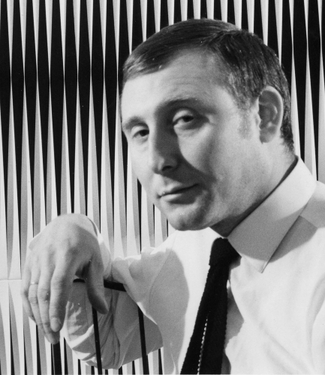
Walter Leblanc
Walter Leblanc initially makes lyric abstract work, then radically changes course around 1960. With the torsion form as most important eleme
-

Victor Vasarely
Victor Vasarely (1908–1997, Hungary/France) moves to Paris in 1930 to work as a graphic designer and begins painting abstract geometric works
-
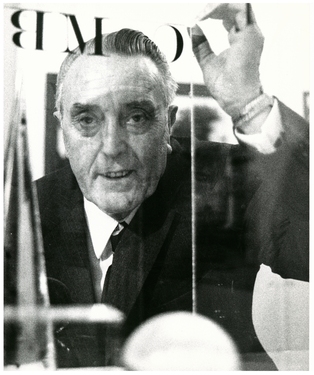
Paul De Vree
Paul De Vree was a pioneer of European concrete poetry and a visual artist. He founded literary journals such as 'De Tafel Ronde' in Belgium
-
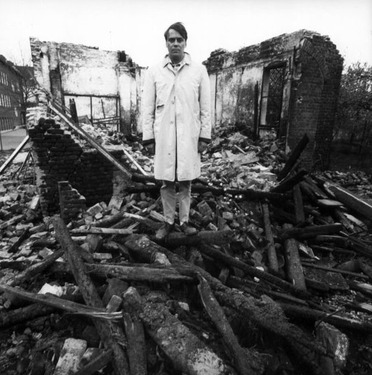
Günther Uecker
On his participation-sheet for Vision in Motion, Uecker calls his works ‘Objecte’. The monochrome white and yellow canvases on panel, and a w